Interreligious Events & Culture in Lübeck
Interreligious Events & Cultural Festivals in Lübeck: What You Can Experience Soon
In the coming months and seasons, Lübeck can feel like a shared living room: doors are open, people engage in conversation, and culture becomes a meeting point between religion, history, and the present. This overview helps you to find upcoming interreligious events and cultural festivals in Lübeck in a targeted way, plan realistically, and choose suitable formats for your visit.
The focus is on two questions: Where do encounters between faith traditions and culture arise? And how can you reliably find the next dates without having to rely on inaccurate social media information?
Cultural Year in Lübeck: Find the Next Highlights Reliably (Without Scheduling Pitfalls)
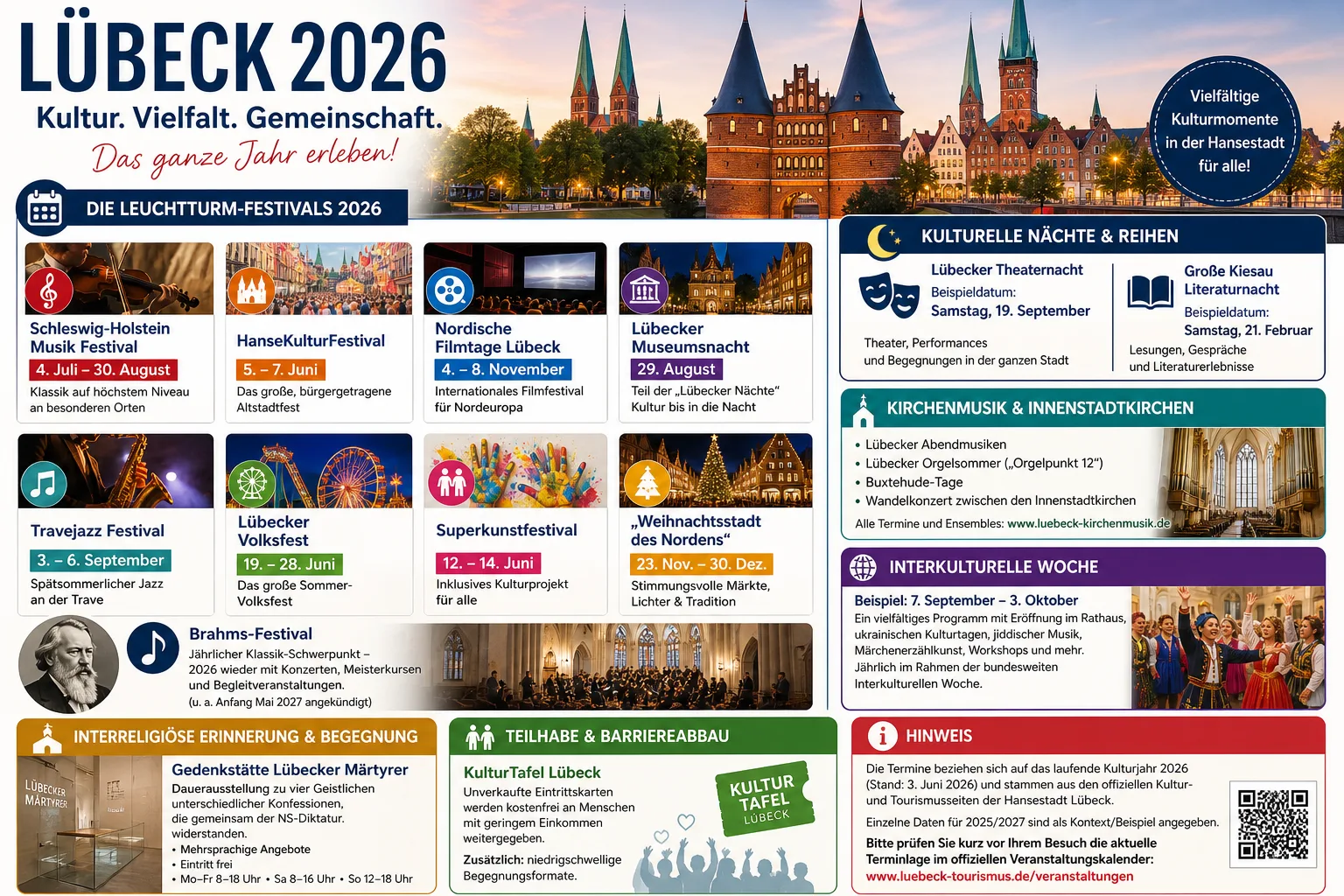
Lübeck's cultural landscape thrives on recurring formats: city festivals, festivals, theme weeks, museum evenings, and concert series. Since specific dates vary by year, the most reliable way for all upcoming events is:
- Check the official event calendars of the city or tourism marketing (including short-term changes).
- Use the program pages of the organizers (festivals, museums, church music, initiatives) as the primary source.
- Check tickets/admission rules directly with the provider (free entry, donation basis, reservation required).
This way, you avoid standing in front of closed doors or missing program points because times, locations, or access rules have changed.
What Typically Awaits in the Coming Months (by Season)
Spring: New Beginnings, Dialogue Formats, Smaller Series
In spring, Lübeck often features kick-off events and series formats: readings, discussion evenings, thematic tours, and smaller concert formats in churches or cultural centers. For interreligious encounters, formats with moderated exchange are particularly suitable (e.g., panels, “Open Doors” evenings, joint music or storytelling projects).
In announcements, look for keywords such as dialogue, encounter, intercultural, religion & society, or peace—these often mark events that are explicitly aimed at understanding.
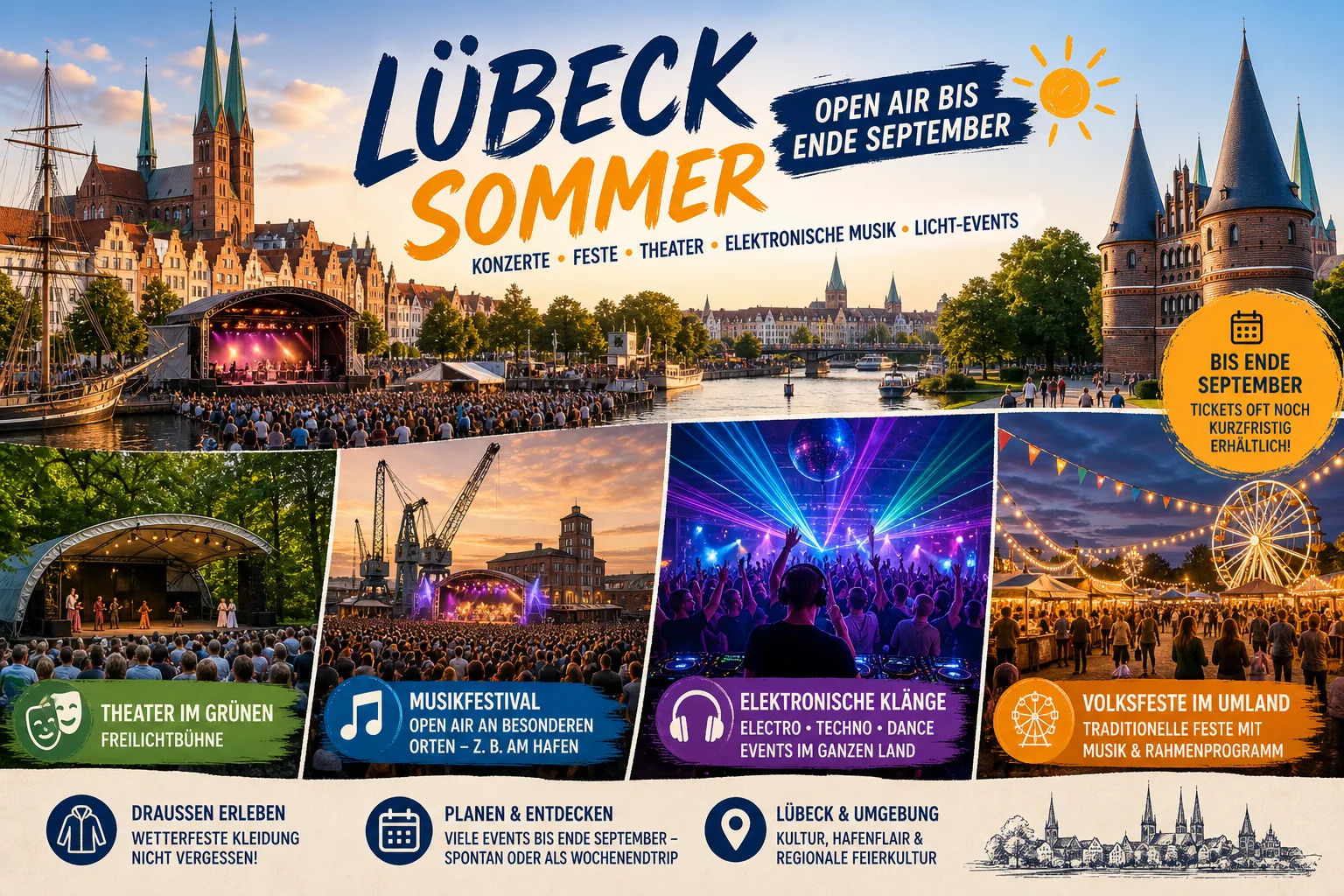
Summer: Open-Air, Neighborhood Festivals, Music in Special Places
In the summer months, culture often moves outdoors: squares, courtyards, and waterfront areas become stages. For interreligious and intercultural encounters, this is especially suitable because open settings are low-threshold—you can be spontaneous, listen, engage in conversation, or just drop by without having to “belong.”
- Neighborhood and Old Town formats: often with tours, open courtyards, and program points from local initiatives.
- Concerts in church spaces: acoustically special, often with cultural-historical introductions.
- Cooperation projects: when several organizations program together (culture, education, religion, social).
Late Summer & Autumn: Festival Season, Museum Evenings, Remembrance Culture
Late summer and autumn are the densest cultural phases in many cities—including Lübeck. Festivals, film and literature formats, and special museum openings often take place then. Interreligious references often appear indirectly: through themes such as identity, migration, remembrance, ethics, nonviolence, or cohesion.
If you are specifically looking for “encounter instead of just consumption,” program points with audience discussion, introduction, workshop, or discussion are usually more rewarding than pure performances.
Winter: Lights, Markets, Charity & Spiritual Music
In winter, Lübeck is often shaped by markets, light actions, Advent and concert programs. For interreligious perspectives, it is worth taking a look at:
- Charity and solidarity events (e.g., in support of social projects).
- Concerts and musical devotional formats in churches—often open to all, regardless of denomination.
- Tours with cultural and religious references (e.g., on customs, musical traditions, or history).
Tip: For winter formats, check the admission situation particularly carefully (capacity, reservation, safety concepts) and plan your arrival/public transport accordingly.
Church Music & Open Concerts: Sound Spaces as Meeting Places
Churches in Lübeck are not only sacred spaces but often also cultural venues. Concert series—especially organ and choral music—are often designed so that people without church affiliation are also welcome. For upcoming dates, the program collections of church music providers are particularly helpful, as they usually bundle several venues.
- Short formats (e.g., lunchtime music) are good if you have little time or just want to “try it out.”
- Evening concerts are often more curated (program booklets, introductions, guest ensembles).
- Walking or themed concerts additionally create opportunities for conversation because they provide context (location, history, content).
For respectful interaction: Photography and applause rules may vary depending on the format. Information about this is usually in the announcement or given on site.
Intercultural Weeks & Dialogue Events: Where Interreligious Practice Becomes Visible
An especially fruitful entry into interreligious offerings are Intercultural Weeks and similar municipal action periods. Events that are explicitly aimed at understanding and diversity are often bundled there—for example through:
- Discussion evenings with representatives of various religious and ideological communities
- Joint cultural evenings (music, storytelling, film, culinary) with moderated exchange
- Tours and open houses (e.g., in congregations or cultural centers)
- Workshops for schools, families, or volunteers
If you only have one evening, formats with clear moderation and a Q&A session are often the most helpful: They provide orientation, create safe conversation rules, and make encounters pleasant even for first-time visitors.
Places of Remembrance & Educational Offers: Culture, History, and Responsibility
In practice, interreligious understanding is often linked to remembrance culture: How is history told? How do we deal with exclusion? What responsibility does this entail for the present and future? In Lübeck, museums, memorial and learning sites, and educational offers can be important points of contact—often supplemented by tours, lectures, or discussions.
For your next visit, it is worth looking at programs that promise context (introduction, curator's tour, contemporary witness or expert discussion). These formats are usually the most “E-E-A-T”-relevant: transparent, source-oriented, and capable of dialogue.
Participation & Removing Barriers: How Culture in Lübeck Becomes More Accessible
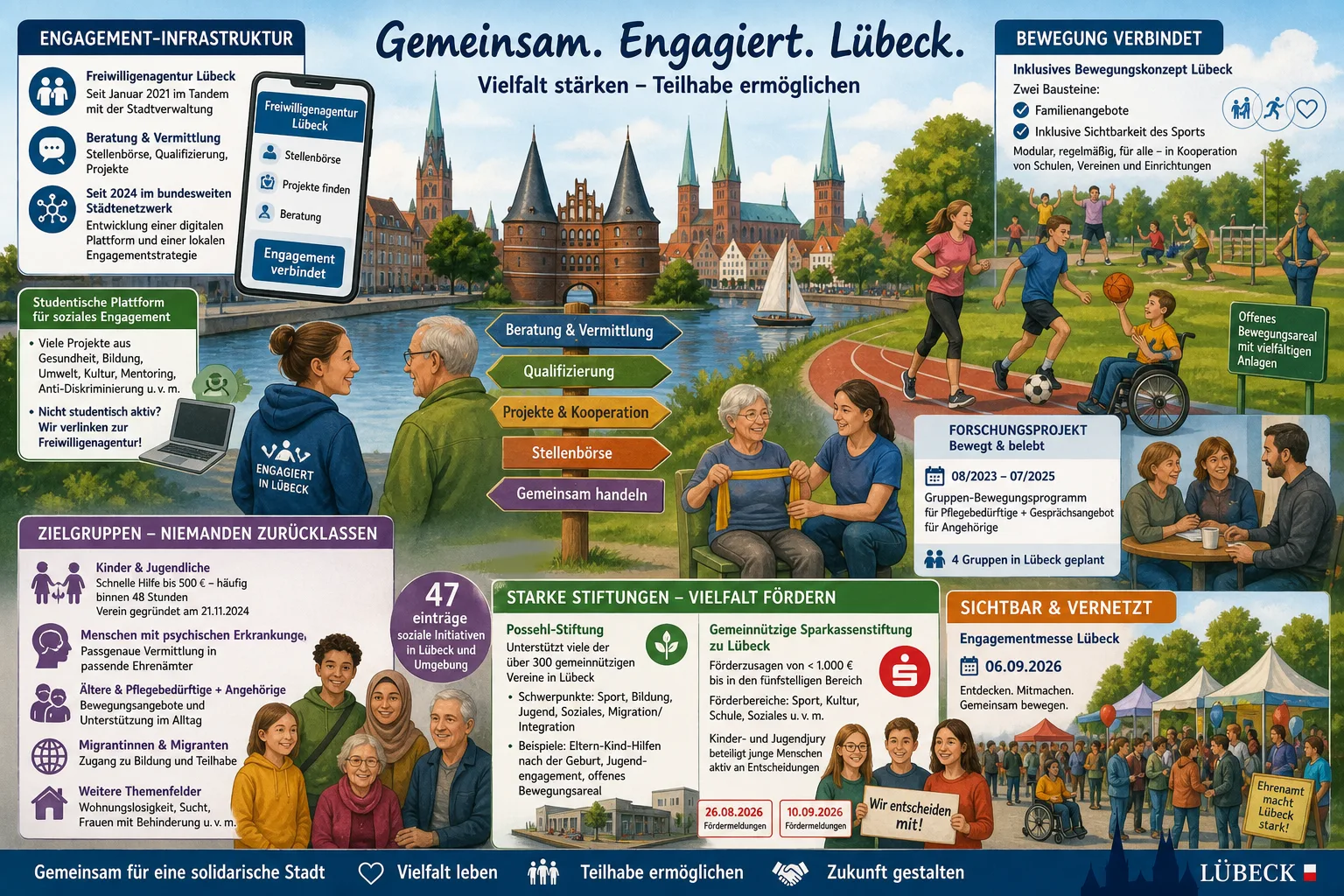
Many people want to attend cultural or interreligious events but are hindered by costs, barriers, or uncertainty (“Is this even for me?”). In Lübeck, there are initiatives that make access easier—including by providing free or discounted tickets for people with low incomes.
- Ticket mediation: Use offers like KulturTafel if you need support yourself or want to accompany someone.
- Low-threshold formats: Look for “free entry,” “donations welcome,” or short concerts without prior knowledge.
- Barrier information: Check announcements for information on wheelchair access, hearing support, or easy language.
If you are traveling as a group (family, school class, seniors, international guests), it makes sense to ask the organizer in advance: Many venues offer group options, reservations, or mediation offers for upcoming dates.
Practical Planning: How to Build Your Personal “Encounter Day”
- Set a starting point: Choose a safe anchor (e.g., museum, church concert, or tour) with a clear time.
- Add a dialogue moment: Look in the calendar for a program point with a discussion component (discussion, Q&A, moderated exchange).
- Open format as a conclusion: Market, neighborhood festival, or an open music format is a good way to end the day socially.
- Respect rules: Different customs may apply in religious spaces (silence, clothing, photography). Follow the instructions on site.
- Include a Plan B: Have a second option ready (e.g., museum instead of open-air) in case of weather or capacity issues.
This turns “just any event” into a harmonious visit that truly brings together culture, city life, and encounter—without stress and without false expectations.