
Johannes Huber (Mediziner, 1946)
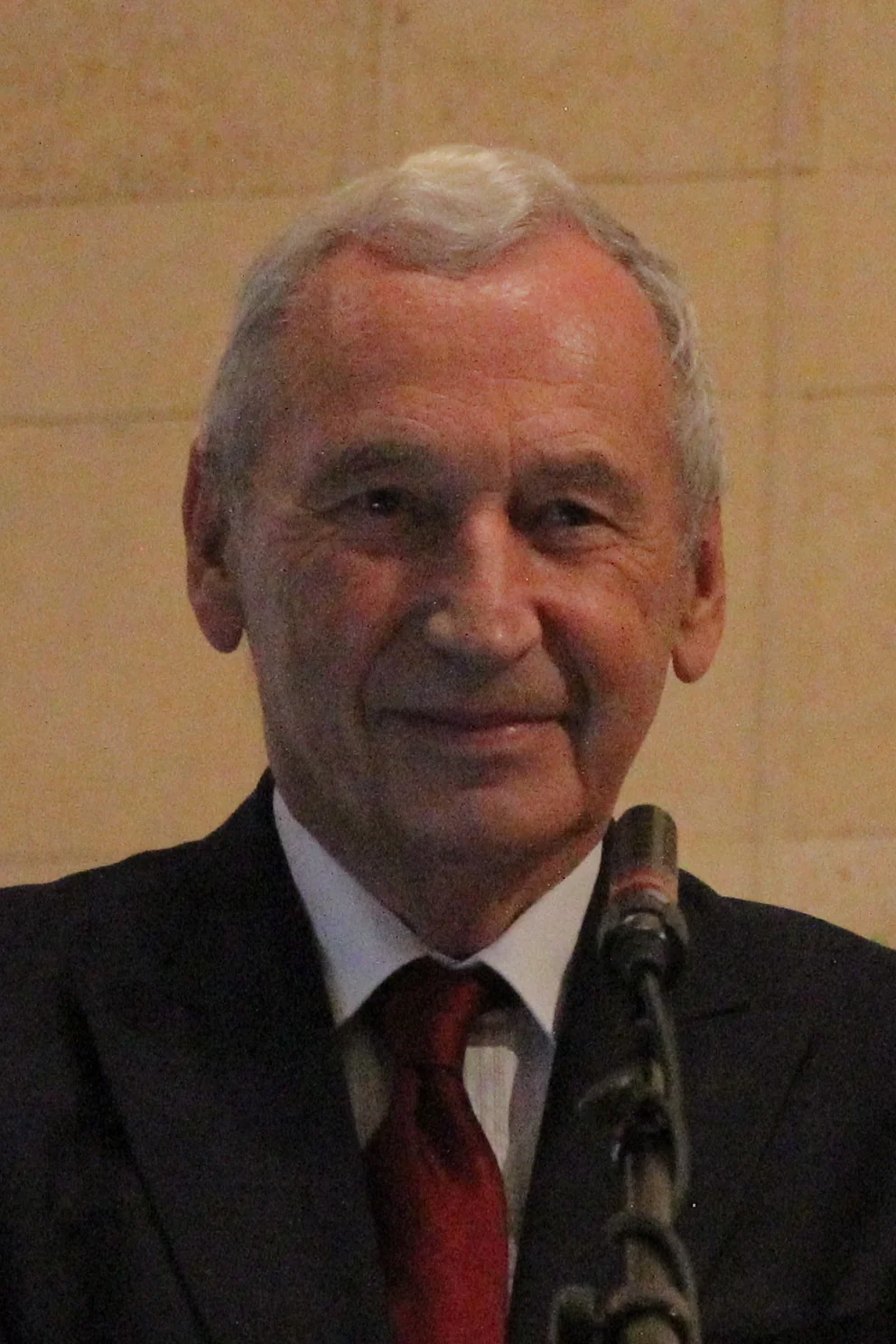
Image from Wikipedia
Image from Wikipedia
Johannes Huber – the Austrian physician, theologian, and controversial author
A life between medicine, theology, and public debate
Johannes Huber, born on May 31, 1946, in Bruck an der Leitha, is one of the defining Austrian personalities at the intersection of medicine, religion, and social debate. His professional journey combines scientific precision with theological reflection and a pronounced presence in public discourse. It is precisely this complexity that makes him a figure who captures attention far beyond the narrower confines of his field. ([de.wikipedia.org](https://de.wikipedia.org/wiki/Johannes_Huber_%28Mediziner%2C_1946%29))
Huber exemplifies a career that encompasses not only an academic trajectory but also cultural and ethical struggles for interpretation. As a physician, endocrinologist, university lecturer, and author, he has shaped a profile defined by expertise, clear stance, and strong media visibility over decades. His career illustrates how medical expertise, anthropological questions, and religious perspectives can intersect. ([de.wikipedia.org](https://de.wikipedia.org/wiki/Johannes_Huber_%28Mediziner%2C_1946%29))
Early influences and academic rise
After graduating from the Bundesgymnasium Hollabrunn in 1965, Huber studied Catholic theology and medicine at the University of Vienna. This dual education laid the groundwork for a later career that constantly merges scientific and spiritual inquiries. In 1973, he earned his doctorate in theology, and in 1975, his doctorate in medicine. ([de.wikipedia.org](https://de.wikipedia.org/wiki/Johannes_Huber_%28Mediziner%2C_1946%29))
A defining period of his early career was his role as one of two personal secretaries to Cardinal Franz König from 1973 to 1983. These years combined ecclesiastical closeness, intellectual engagement, and institutional experience, providing the background for a career in which Huber did not confine himself to a single discipline but developed an interdisciplinary profile. ([de.wikipedia.org](https://de.wikipedia.org/wiki/Johannes_Huber_%28Mediziner%2C_1946%29))
Medical career and professional authority
In 1985, Huber habilitated at the Medical University of Vienna with a thesis on structural and numerical chromosomal aberrations in gynecological malignancies. From 1992 to 2011, he served as a professor and head of the clinical department for endocrinology and reproductive medicine at the University of Vienna, and from 2004 at the Medical University of Vienna. Between 1995 and 1996, he temporarily took charge of the entire women's clinic at the Vienna General Hospital (AKH). ([de.wikipedia.org](https://de.wikipedia.org/wiki/Johannes_Huber_%28Mediziner%2C_1946%29))
His scientific focus areas included women's health, reproductive medicine, endocrinology, and interdisciplinary gynecology. Professionally, Huber is primarily categorized as an endocrinologist, meaning a physician with special expertise in hormonal balance, metabolic processes, and issues of reproductive medicine. His public authority lies exactly here: in the connection of clinical practice, research, and ethical reflection. ([de.wikipedia.org](https://de.wikipedia.org/wiki/Johannes_Huber_%28Mediziner%2C_1946%29))
Between science, bioethics, and public impact
From 2001 to 2006, Huber was chair of the Bioethics Commission and also a member of the Supreme Sanitary Council, as well as a corresponding member of the Alpbach Foundation. In these roles, he influenced debates touching on medical, societal, and moral questions. His role was never purely administrative but always also discursive and opinion-forming. ([de.wikipedia.org](https://de.wikipedia.org/wiki/Johannes_Huber_%28Mediziner%2C_1946%29))
This impact became especially evident in the discussion surrounding advance directives and questions of life protection. Huber provoked with positions that were met with controversy in public. This illustrates a career that was not aimed at quiet professional practice, but at the struggle for interpretative authority in sensitive ethical fields. ([de.wikipedia.org](https://de.wikipedia.org/wiki/Johannes_Huber_%28Mediziner%2C_1946%29))
Publications and intellectual self-understanding
Huber is not only a physician but also a prolific author. His publications range from Hormones for Beauty to The End of Aging and later works such as The Holistic Human, The Anatomy of Destiny, and The Soul Healer. These titles reflect a recurring interest in body, mind, meaning, and the limits of scientific explanations. ([de.wikipedia.org](https://de.wikipedia.org/wiki/Johannes_Huber_%28Mediziner%2C_1946%29))
It is these publications that made him known to a broader audience. His books combine popular scientific communication with existential and religious questions, positioning Huber in a space between non-fiction, life interpretation, and spiritual reflection. This is a crucial part of his cultural influence: he writes not only for professional circles but for readers who engage with age, gender, meaning of life, and human development. ([de.wikipedia.org](https://de.wikipedia.org/wiki/Johannes_Huber_%28Mediziner%2C_1946%29))
Criticism, controversies, and media friction
Huber's public profile also includes criticism. The Wikipedia entry notes that he has been criticized for spreading esoteric and pseudoscientific content. The accusations related, in particular, to a commercially offered cancer therapy he developed with another doctor, as well as statements that critics deemed anti-scientific. ([de.wikipedia.org](https://de.wikipedia.org/wiki/Johannes_Huber_%28Mediziner%2C_1946%29))
These controversies made Huber a controversial figure in the medical-scientific discourse. While supporters emphasized his interdisciplinary openness, critics saw a problematic proximity to esoteric thought. The tension between scientific ambition and public provocation remains a central characteristic of his work. ([de.wikipedia.org](https://de.wikipedia.org/wiki/Johannes_Huber_%28Mediziner%2C_1946%29))
Awards and recognition
Despite the controversies, Huber has received numerous awards. These include the Grand Silver Honorary Badge for Services to the Republic of Austria in 2006, the Opilio Rossi Medal in 2019, the Golden Doctorate Diploma from the Catholic-Theological Faculty of the University of Vienna in 2023, the MenoAward in 2024, and the Thomas Morus Prize in 2026. These honors demonstrate his enduring presence in science, church, and public life. ([de.wikipedia.org](https://de.wikipedia.org/wiki/Johannes_Huber_%28Mediziner%2C_1946%29))
The awards underline that Huber is perceived not only as a contentious publicist but also as a professional with institutional recognition. This dual role—honored and controversial at the same time—gives his profile a unique tension. It makes him a figure that has provided conversation material in Austria for decades. ([de.wikipedia.org](https://de.wikipedia.org/wiki/Johannes_Huber_%28Mediziner%2C_1946%29))
A culturally influential profile beyond classical field boundaries
Huber's life's work shows how strongly medical expertise, religious education, and public communication can mutually reinforce each other. His career does not follow a linear path within a single field but moves between clinic, university, church, journalism, and debate. This is precisely where his reach originates: from the ability to bring complex topics into broad societal discussions. ([de.wikipedia.org](https://de.wikipedia.org/wiki/Johannes_Huber_%28Mediziner%2C_1946%29))
When considering Johannes Huber, one does not see a classic cultural star, but an intellectual actor with significant media impact. His books, positions, responsibilities, and the reactions to them create a body of work filled with arguments, intensifications, and interpretative offers. For readers interested in medical ethics, contemporary history, and spiritual biographies, he remains an exceptionally intriguing personality. ([de.wikipedia.org](https://de.wikipedia.org/wiki/Johannes_Huber_%28Mediziner%2C_1946%29))
Conclusion: A life on the borders of the ordinary
Johannes Huber fascinates because he understands medicine not merely as a discipline but as a cultural and ethical task. His biography intertwines scientific career, ecclesiastical closeness, journalistic productivity, and controversial public impact into an unusually dense overall picture. This blend of authority, friction, and intellectual curiosity makes him a defining voice in the Austrian discourse. ([de.wikipedia.org](https://de.wikipedia.org/wiki/Johannes_Huber_%28Mediziner%2C_1946%29))
Engaging with Johannes Huber means encountering a personality that sharpens rather than calms questions. His work invites a reading of medicine, faith, and society as interconnected fields. This not only makes him relevant but also a lasting topic of discussion. ([de.wikipedia.org](https://de.wikipedia.org/wiki/Johannes_Huber_%28Mediziner%2C_1946%29))
Official channels of Johannes Huber:
- Instagram: No official profile found
- Facebook: No official profile found
- YouTube: No official profile found
- Spotify: No official profile found
- TikTok: No official profile found
Sources:
- Wikipedia – Johannes Huber (Physician, 1946)
- Wikipedia – Biography, Work, Criticism, and Publications
- Wikipedia – Awards and Work Overview
- Wikipedia: Image and text source