
Tom Schreiber
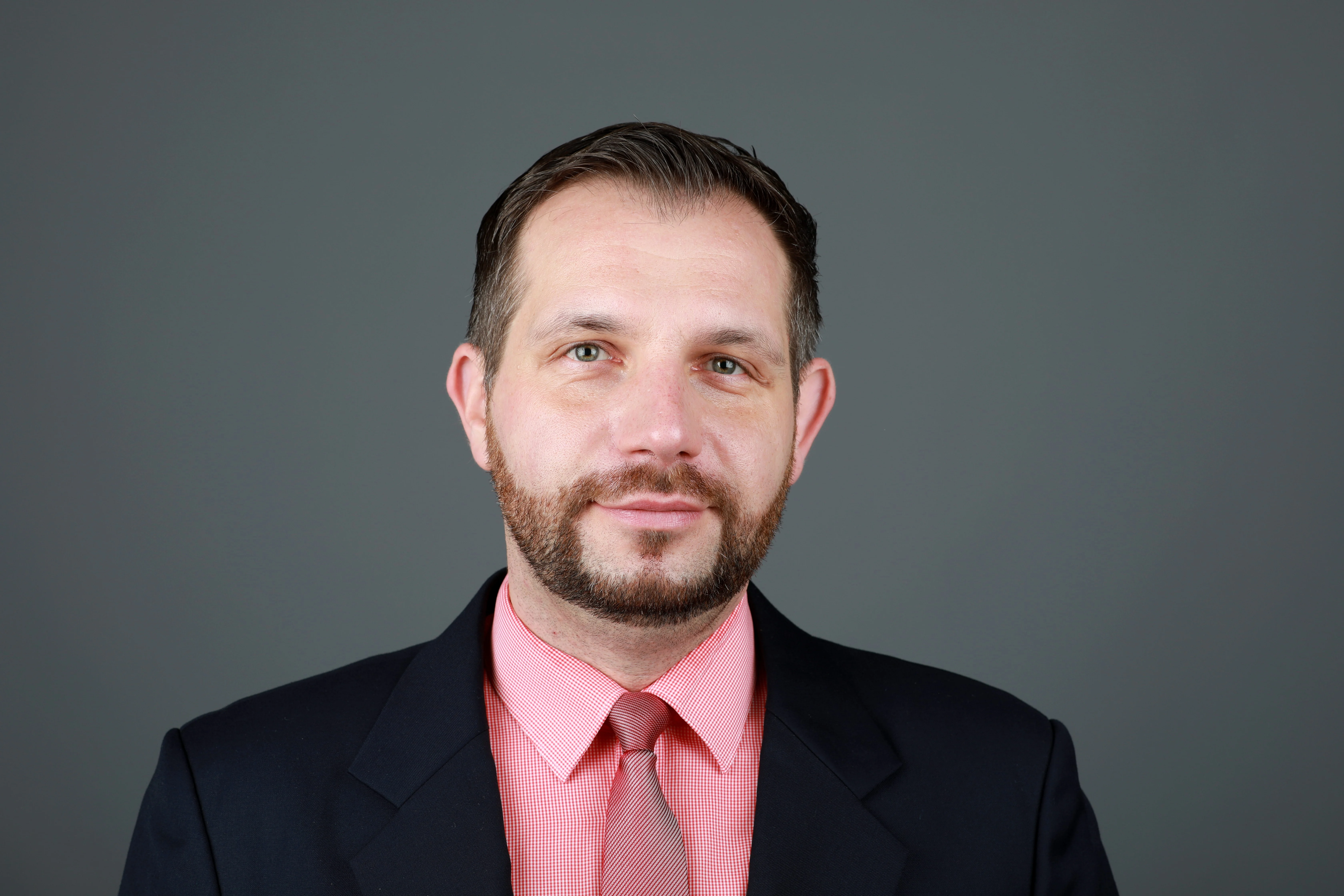
Image from Wikipedia
Image from Wikipedia
Tom Schreiber – a Berlin politician with a clear stance and extensive parliamentary experience
From Berlin’s neighborhoods to state politics: Tom Schreiber and his role in the House of Representatives
Tom Schreiber, born on October 27, 1978, in Berlin-Buch, is among the defining SPD politicians of Berlin state politics of his generation. His name is synonymous with a long political career closely linked to the capital, which began in 2006 in the House of Representatives of Berlin and ended in March 2023. Examining his work reveals a representative who, for many years, was firmly anchored in domestic affairs, security and legal policy, as well as issues concerning the district of Köpenick. ([parlament-berlin.de](https://www.parlament-berlin.de/Abgeordnete/tom-schreiber?utm_source=openai))
Biographical roots and political entry
Schreiber was born in Berlin, which politically and biographically deeply roots him in the city. According to the official parliamentary website, he was elected to the House of Representatives through direct election; his parliamentary career began on October 26, 2006, and ended on March 16, 2023. Early on, he combined municipal experience with state political ambition: The SPD parliamentary group lists his roles as a citizen deputy, district representative, and later as a long-term member of the state parliament. ([parlament-berlin.de](https://www.parlament-berlin.de/Abgeordnete/tom-schreiber?utm_source=openai))
The official presentation of his work depicts a politician who does not see himself as a distant figure, but as a representative of a specific neighborhood. On his website, he emphasizes the 16 years during which he helped shape Köpenick and Berlin; this connection between mandate and neighborhood continues to shape his public profile today. In the language of political biography, this is not an abstract career path, but a continuous anchoring in local responsibility. ([tom-schreiber.berlin](https://tom-schreiber.berlin/))
Career in the House of Representatives: Domestic policy, law, and security
In the Berlin parliament, Schreiber established himself primarily in departments that require high expertise and solid detailed work. His website lists among his political topics, among others, internal affairs and law, police, fire brigade, judiciary, organized crime, constitutional protection, right-wing extremism, Islamism, Scientology, and queer politics. Additionally, he worked on committees such as the Committee for Internal Affairs, Security and Order, the Committee for Constitutional and Legal Affairs, the Rules of Procedure, Consumer Protection, Anti-Discrimination, and also in the G10 Commission. ([tom-schreiber.berlin](https://tom-schreiber.berlin/))
This thematic breadth hints at a political musicality in a figurative sense: Schreiber did not rely on grand staging, but on the precise arrangement of parliamentary work. The official pages mention internships with LKA units, deployments with the Berlin police, and numerous contributions to issues of internal security. Those analyzing his career see a representative who engaged with the institutional rhythm of the parliament and developed reliable presence there over the years. ([tom-schreiber.berlin](https://tom-schreiber.berlin/))
The parliamentary years as work on profile and position
The SPD parliamentary group and the Berlin House of Representatives document Schreiber as a member with a long mandate and clear constituency ties. He was directly elected, represented Treptow-Köpenick, and was part of the political disputes in the state of Berlin over many legislative periods. The official page of his former constituency office points to his role as a contact person on site; therein lies a significant part of his political identity. ([parlament-berlin.de](https://www.parlament-berlin.de/Abgeordnete/tom-schreiber?utm_source=openai))
Party work also played a role early on. The SPD parliamentary group notes him as a member of the district board of the SPD Treptow-Köpenick as early as 2005; prior to that, he was politically active in the district and served as a district representative until 2006. This development shows no abrupt career, but a gradual intensification of municipal experience, party political involvement, and state political responsibility. ([spdfraktion-berlin.de](https://www.spdfraktion-berlin.de/node/165?utm_source=openai))
Topics, stance, and political style
Schreiber’s public profile is closely linked to security and order policy. His website repeatedly features contributions related to police, riot units, and the state criminal police; this indicates a lasting interest in the practical work of authorities and in how state presence is organized in the everyday life of the city. The official presentation suggests that he understood political responsibility as a blend of institutional proximity and urban grounding. ([tom-schreiber.berlin](https://tom-schreiber.berlin/))
In terms of content, a strong commitment to queer politics and engagement with extremism adds to this. This combination is particularly relevant for Berlin state politics because it addresses the tensions of a growing, diverse metropolis. Schreiber thus appears as a politician who does not isolate classical domestic politics, but thinks in relation to social diversity, the rule of law, and public order. ([tom-schreiber.berlin](https://tom-schreiber.berlin/))
Public perception and media coverage
The press reported on Schreiber primarily in the context of political security, conflicts, and public debates. For instance, Der Tagesspiegel addressed him regarding demands for a tougher approach to politically motivated violence; B.Z. described hostilities from the left-wing extremist scene. This coverage situates him as an actor who took positions in politically charged fields and thus became a visible part of Berlin's conflict culture. ([tagesspiegel.de](https://www.tagesspiegel.de/berlin/spd-politiker-tom-schreiber-fordert-harteres-vorgehen-gegen-politisch-motivierte-gewalt-3682555.html?utm_source=openai))
Such responses shape the image of a politician whose work did not remain in the background. Especially in Berlin's state politics, where security, urban development, and societal negotiation are closely intertwined, impact often arises not from loudness but from perseverance, thematic specialization, and the willingness to endure conflicts. This is a substantial part of Schreiber’s publicly perceived authority. ([tagesspiegel.de](https://www.tagesspiegel.de/berlin/spd-politiker-tom-schreiber-fordert-harteres-vorgehen-gegen-politisch-motivierte-gewalt-3682555.html?utm_source=openai))
Current phase and political transition
On his official homepage, Schreiber points out that he was unable to retain constituency 5 in Treptow-Köpenick during the repeat election in 2023. At the same time, he expresses gratitude for 16 eventful years in the Berlin House of Representatives and describes this period as one of joint shaping with the SPD Berlin and the SPD parliamentary group. This does not mark an abrupt break but a controlled transition out of the mandate. ([tom-schreiber.berlin](https://tom-schreiber.berlin/))
For a political biography, this moment is significant as it marks the conclusion of a long parliamentary career. Schreiber remains an example of a classic direct election politician: locally rooted, clearly positioned thematically, and active over the years in the same institutional spaces. This makes his career interesting for readers who want to understand Berlin state politics not just as current events but as a long-term political structure. ([parlament-berlin.de](https://www.parlament-berlin.de/Abgeordnete/tom-schreiber?utm_source=openai))
Cultural and political influence
Tom Schreiber has no artistic discography, no chart-topping hits, and has not produced any music; his influence lies in political craftsmanship. Nevertheless, his public presence is driven by a clear narrative: reliability in the constituency, specialization in domestic politics, and visible work at the friction points of a major city. This gives his biography relevance that extends beyond party politics into the cultural landscape of Berlin. ([parlament-berlin.de](https://www.parlament-berlin.de/Abgeordnete/tom-schreiber?utm_source=openai))
Particularly in the interplay of parliamentary experience, security and legal issues, and local proximity, a profile emerges that remains engaging for politically interested readers. Schreiber represents a form of state politics that does not rely on short-term staging but on institutional competence, continuity, and solid knowledge of Berlin’s realities. Those who wish to understand him read him as a politician of the practical, not the abstract republic. ([tom-schreiber.berlin](https://tom-schreiber.berlin/abgeordnetenhaus_und_spdfraktion/))
Conclusion: A long-serving Berlin representative with a clear profile
Tom Schreiber is compelling because his career paints the picture of a consistently working Berlin SPD politician who has pursued the same issues with perseverance for many years. His story speaks of direct anchoring in Treptow-Köpenick, of domestic policy, law, and public safety, as well as a long phase of parliamentary responsibility. Those who enjoy political biographies find no sensationalism here, but rather substance, continuity, and a clear signature. ([parlament-berlin.de](https://www.parlament-berlin.de/Abgeordnete/tom-schreiber?utm_source=openai))
This mix makes Schreiber an interesting public figure: he embodies the artisanal Berlin of politics, the work in committees, in the constituency, and in debate. Those tracing his career recognize a pattern of proximity, perseverance, and thematic focus rather than posturing. For politically aware readers, taking a look at this career is worthwhile as it exemplifies how state politics in Berlin functions. ([tom-schreiber.berlin](https://tom-schreiber.berlin/abgeordnetenhaus_und_spdfraktion/))
Official channels of Tom Schreiber:
- Instagram: https://www.instagram.com/tomschreiber_mda/
- Facebook: https://www.facebook.com/TomSchreiberMdA/
- YouTube: https://www.youtube.com/channel/UCGwSoo3tLO8Xdk-VsftrT_g
- Spotify: No official profile found
- TikTok: No official profile found
Sources:
Upcoming Events
Beautiful Souls